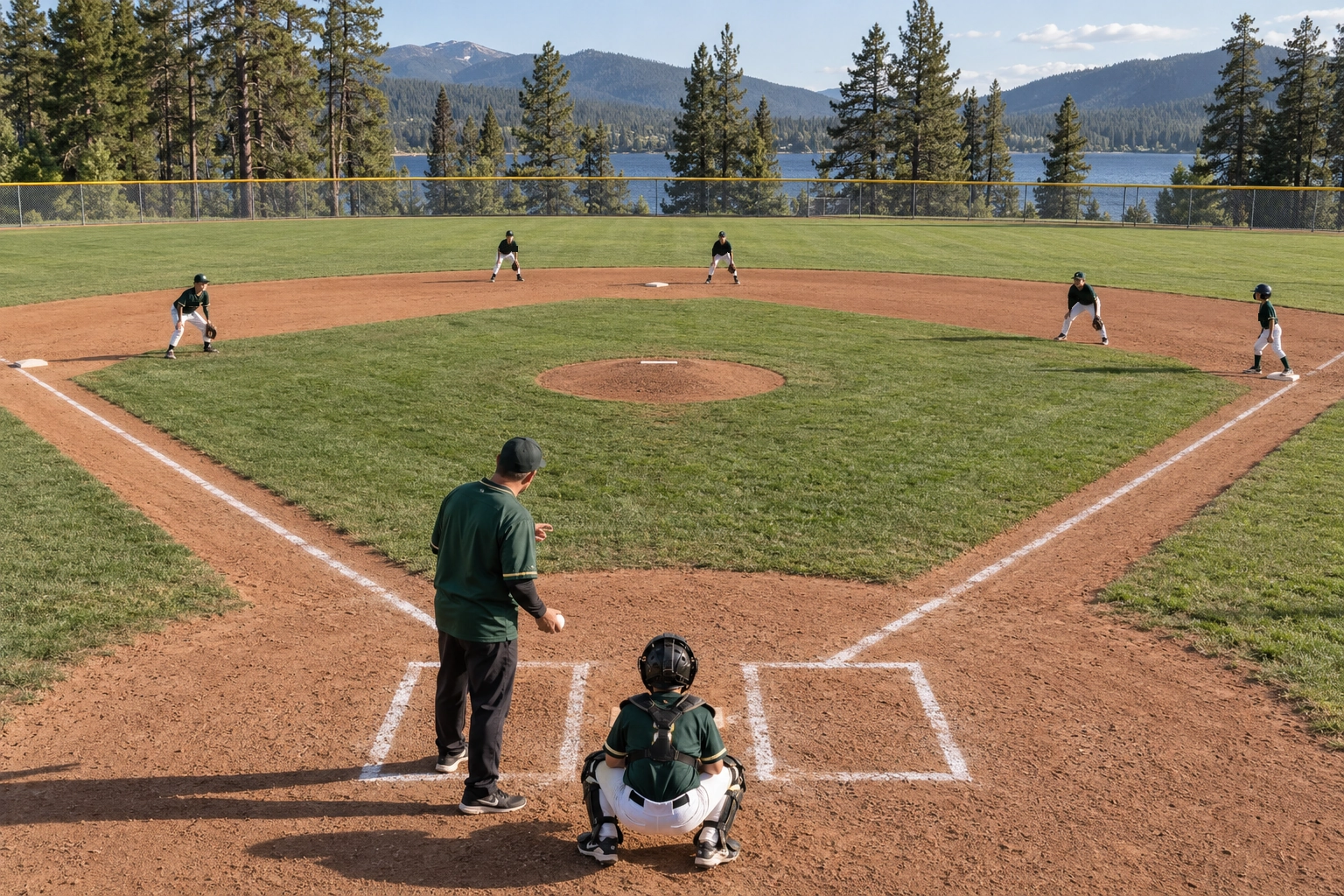
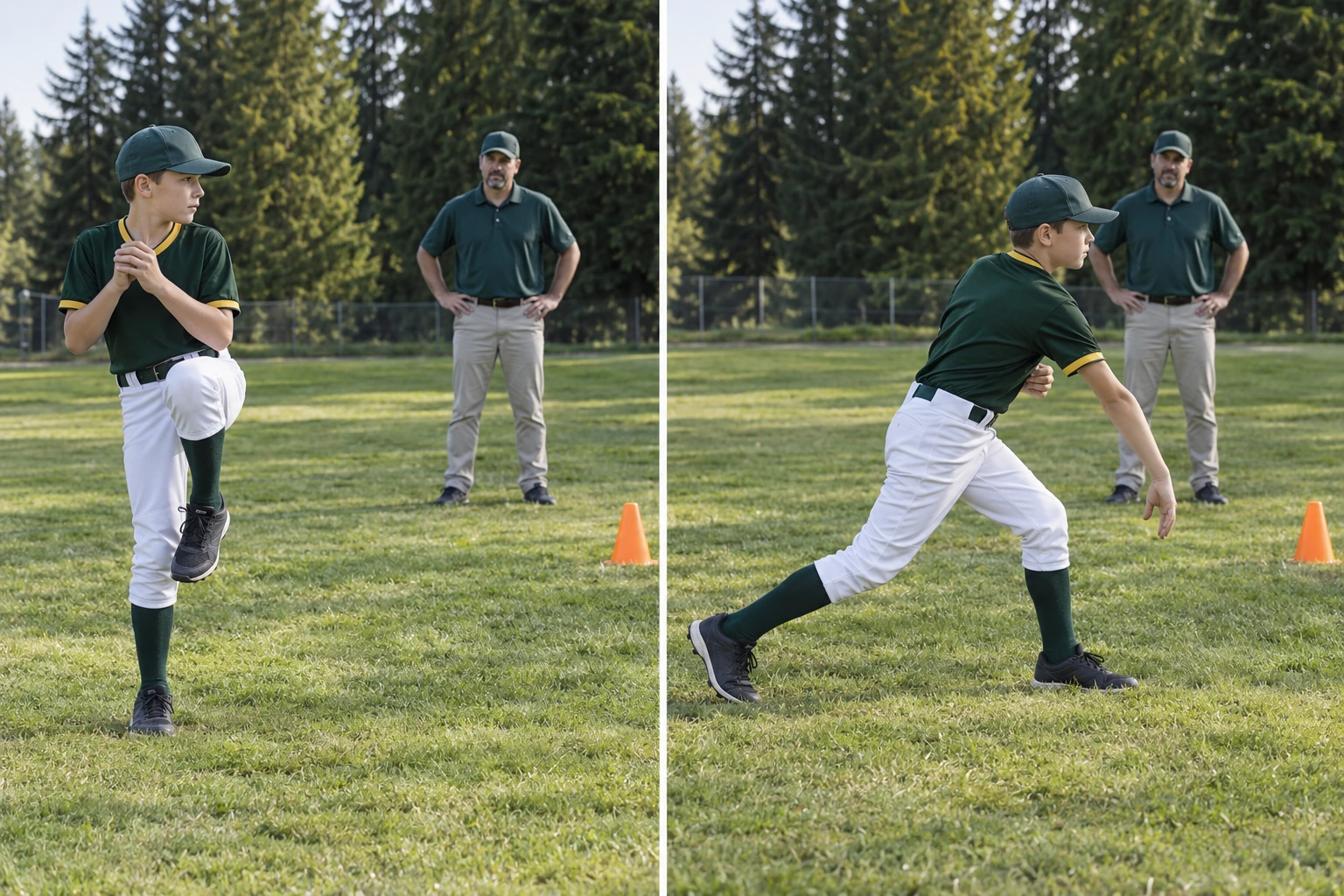
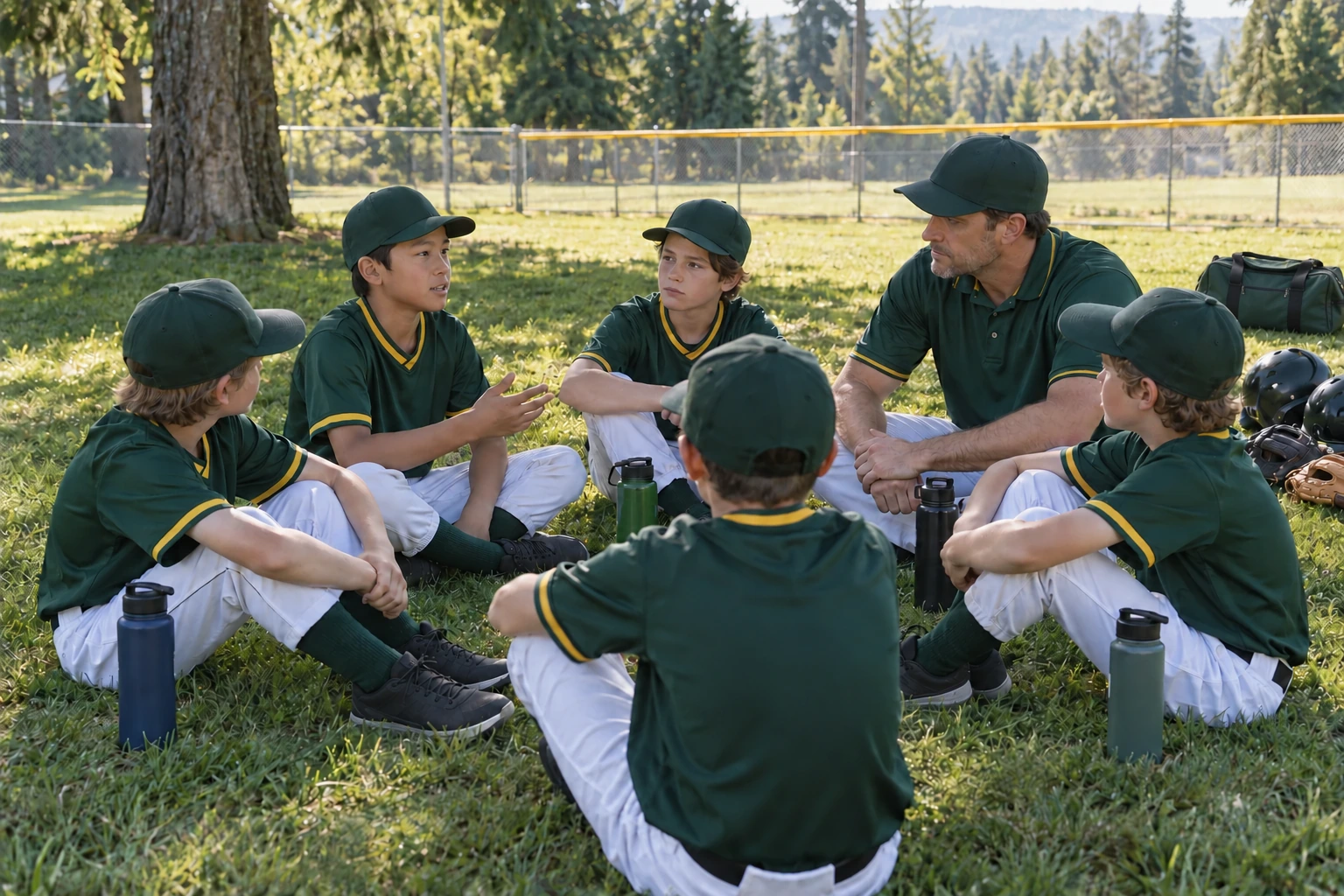
Hitting Mechanics & Plate Approach
Situation 01
Build a repeatable ready position
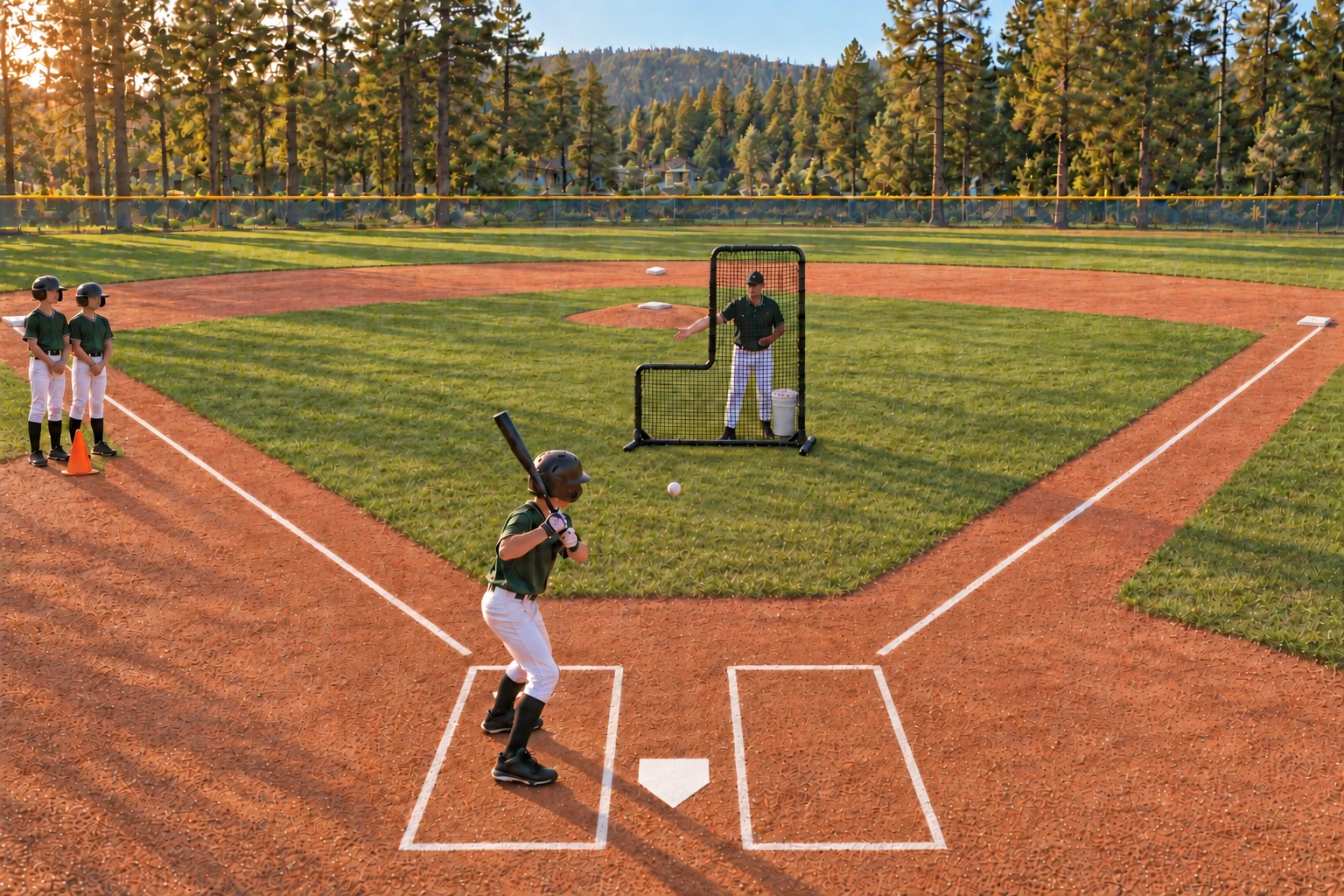
Before a tee rep, settle into an athletic stance. Keep your eyes level and leave room for your hands to move. This is a coaching starting point, not a required stance.
Coaching Points
Watch balance at contact before adding a second instruction.
Common Mistakes
A long list of cues can make a player freeze.
Alternative Considerations
A comfortable stance can differ by player; use contact quality rather than appearance.
Coaching tip
Situation 02
Choose a pitch to attack
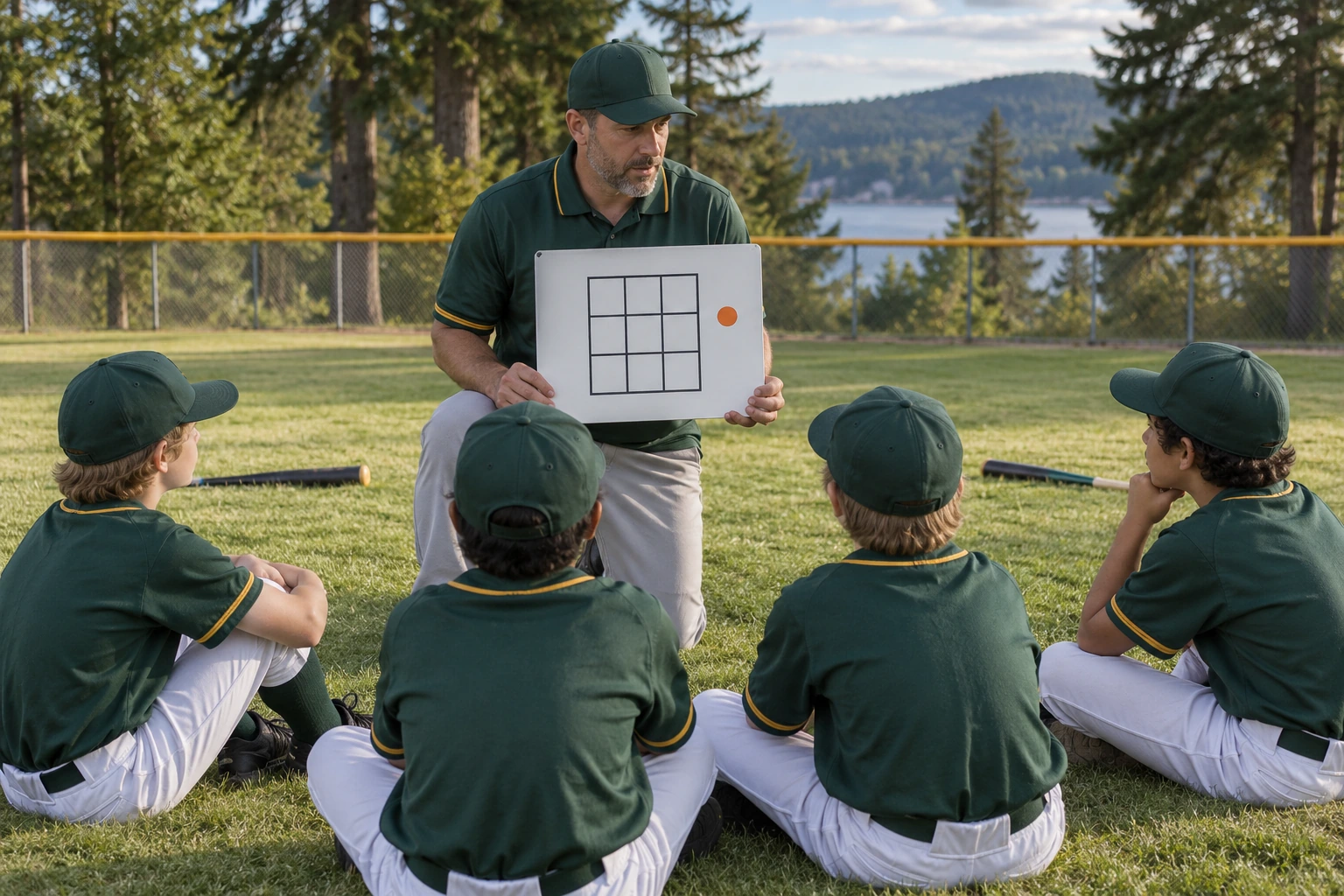
The coach asks you to name the pitch location you can drive before entering the box. Pick a simple target zone, then adjust with the count.
Coaching Points
Ask the player to describe the decision, not just the result.
Common Mistakes
A hit on a chased pitch does not make chasing a repeatable plan.
Alternative Considerations
Team instructions may change with the count and situation; agree before the at-bat.
Coaching tip
Situation 03
Compete with two strikes
During a coach-led drill, you have two strikes. The coach mixes pitches in and outside the strike zone.
Coaching Points
Use mixed locations and let the hitter explain the read.
Common Mistakes
Calling every swing good because contact occurred hides poor decisions.
Alternative Considerations
A smaller stride is an option, not a universal requirement.
Coaching tip
Situation 04
Use the right batting station
AA local instructions prohibit bunting and fake bunting. Your coach sets up a contact-hitting station.
Coaching Points
Explain the local restriction before the rep, then give one simple movement cue.
Common Mistakes
AA does not permit a bunt station.
Alternative Considerations
Use dry repetitions or the league-provided RIFF 5 ball for AA practice.
Related rule or safety source: Batting Eligibility
Situation 05
Stay balanced through contact
A controlled pitch enters the hitter's chosen zone and the front foot has landed.
Coaching Points
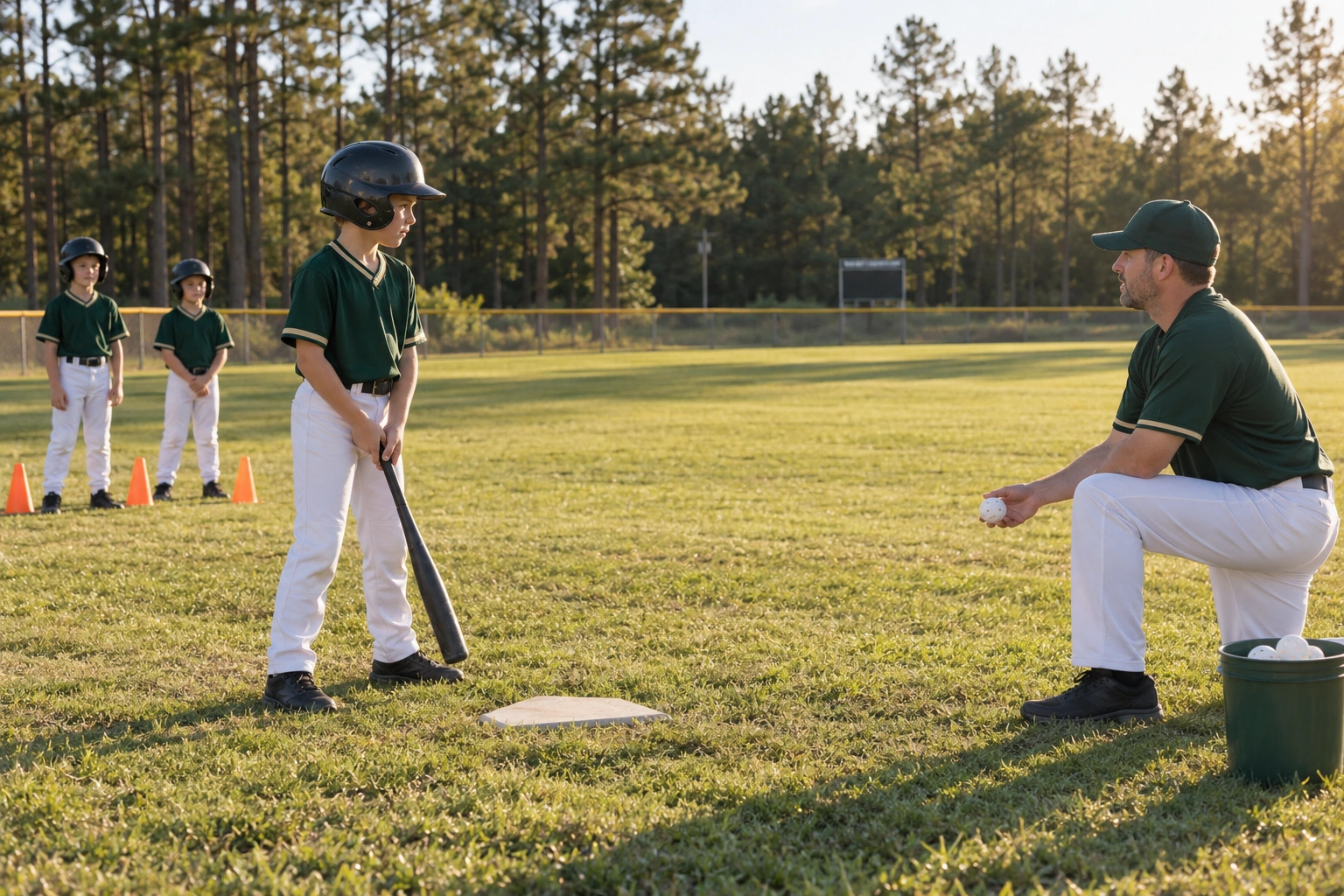
Use a tee or controlled toss to compare balanced contact with a reach.
Common Mistakes
Reaching early or looking away makes the barrel harder to control.
Alternative Considerations
Players can have different comfortable contact points; watch the ball and stay balanced.
Coaching tip
Situation 06
Wait without an on-deck swing
You are next to bat. Another batter is at the plate and teammates are nearby.
Coaching Points
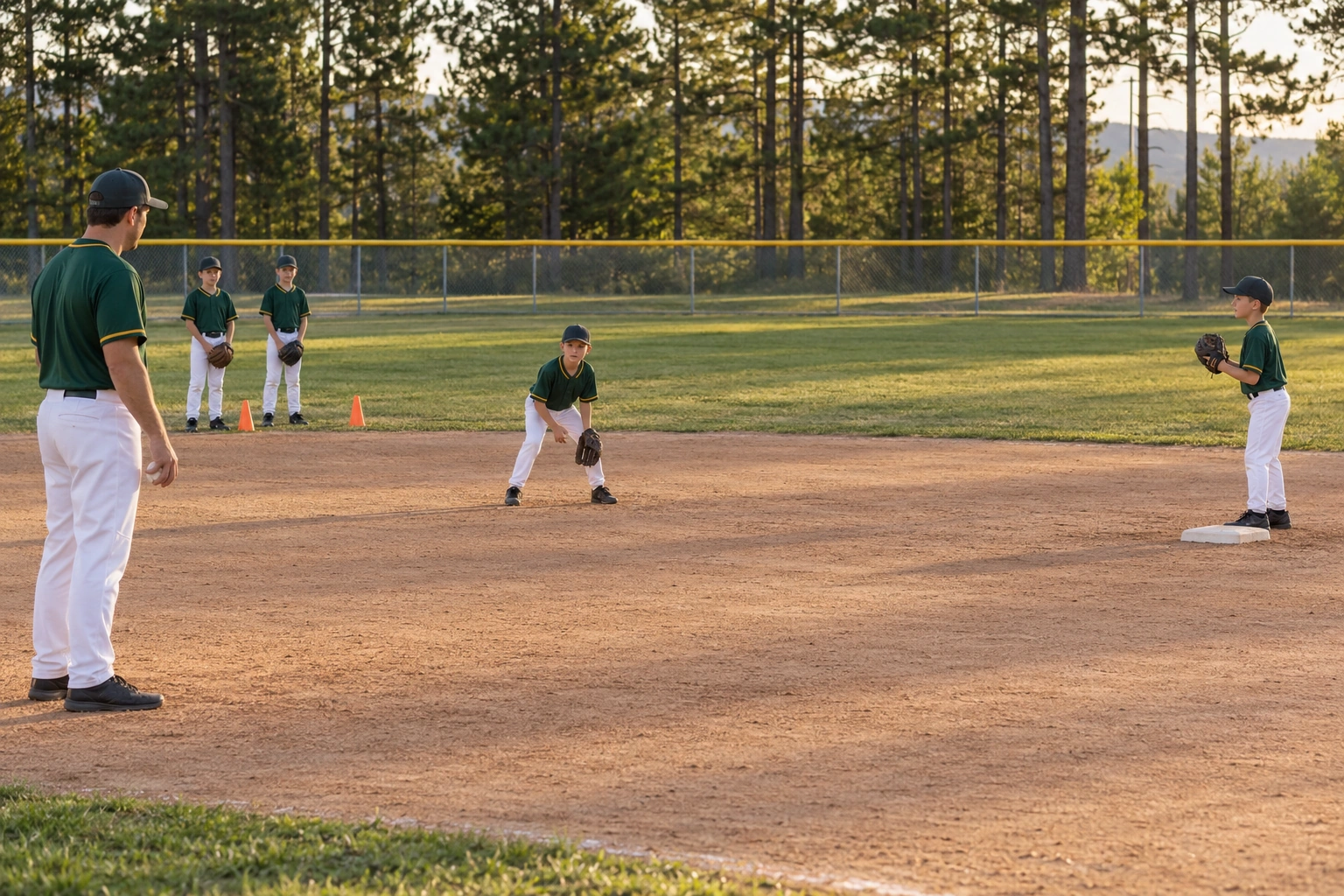
The adult provides a safe no-swing waiting routine.
Common Mistakes
Being next does not authorize a warm-up swing beside teammates.
Alternative Considerations
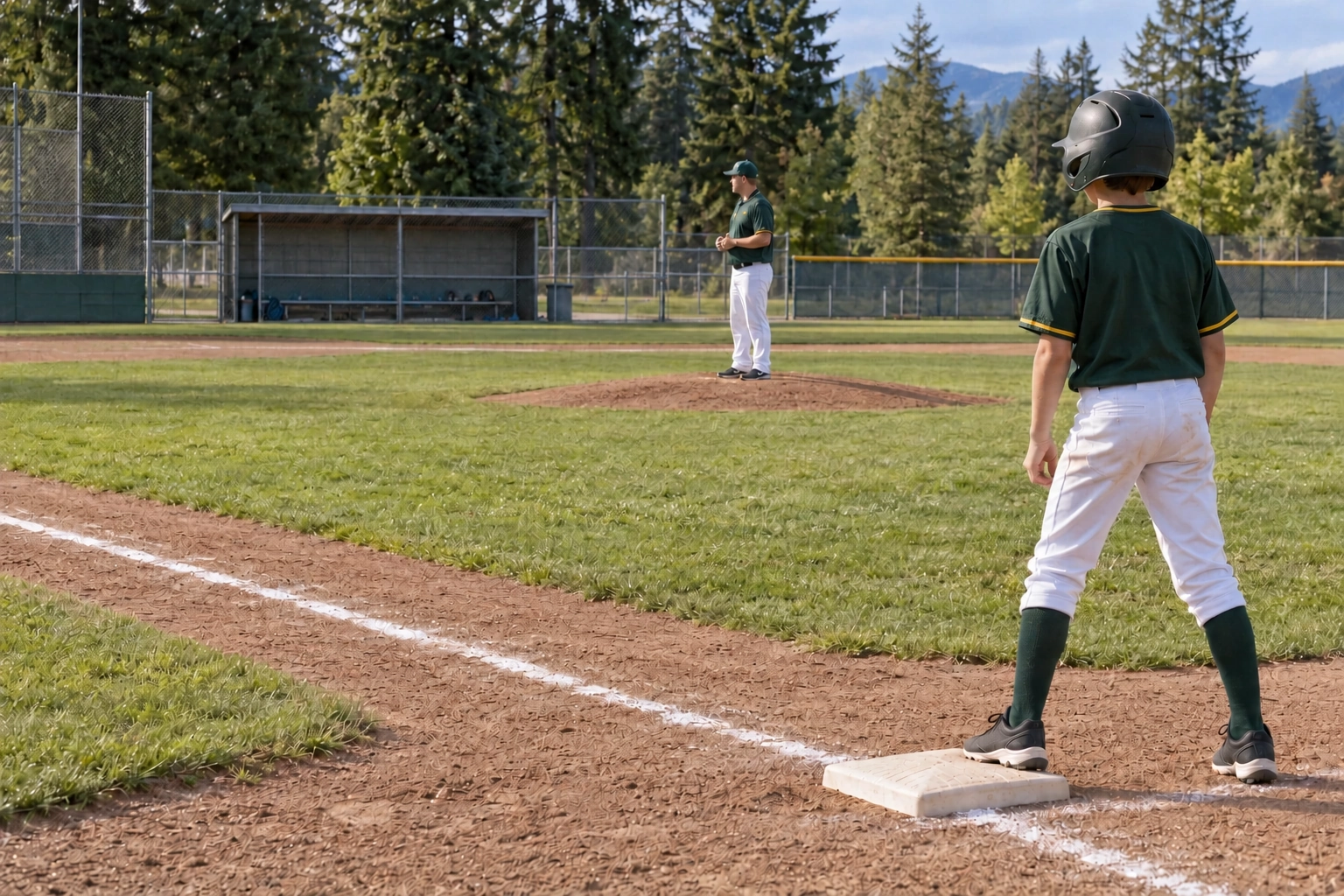
Do not pick up a bat until it is your turn at bat.
Related rule or safety source: On-deck safety
Learn first
Learn the skill
Read these ideas, then try the situations below. Practice with a coach when a movement is new.
Quiz Mode: try each answer before checking the explanation.
Coach View: use the answers and teaching notes to guide practice.
Hold the bat for control
Place your hands together on the handle with a comfortable grip. Keep the barrel ready without squeezing so hard that your arms lock. If the bat feels too heavy to control, ask a coach to check the size.
Build the swing from the ground
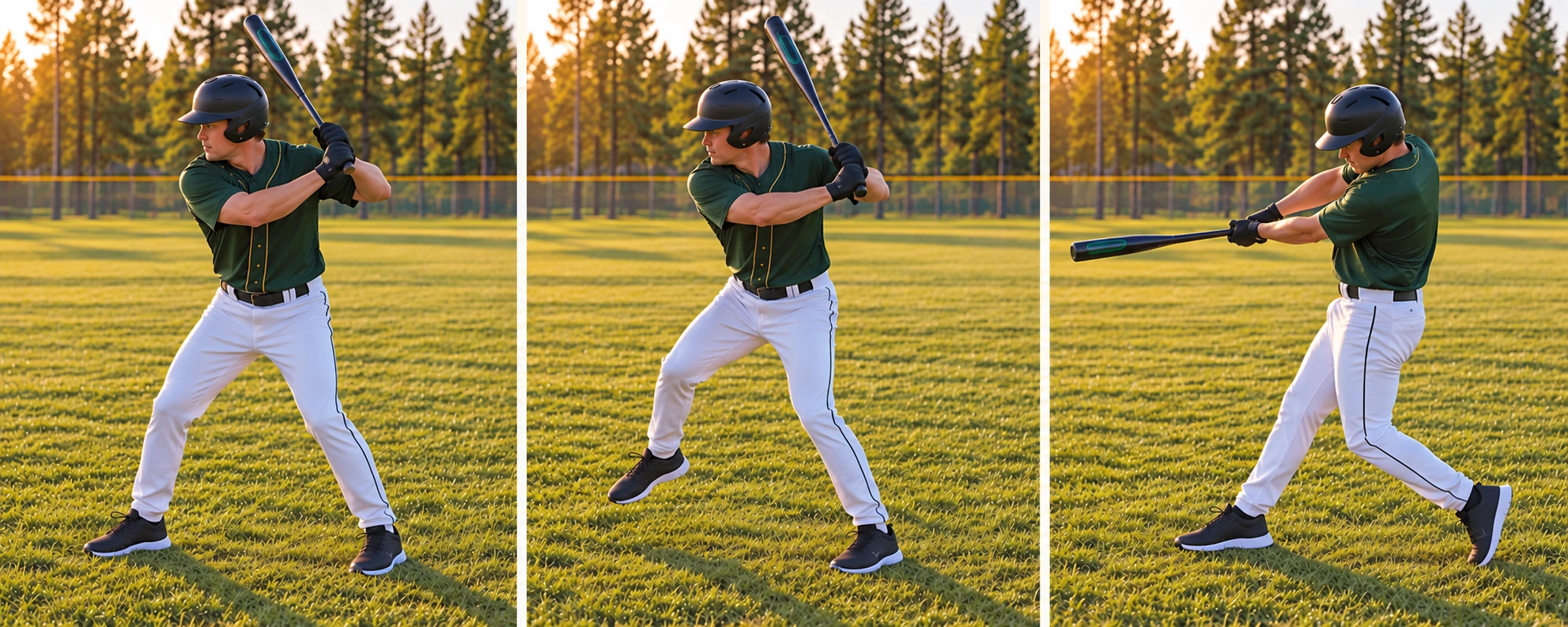
Start in a balanced stance with your eyes on the pitcher and your hands free to move. As the pitch arrives, stride under control, turn your hips and torso, then bring the barrel through the hitting zone. A swing that stays balanced lets you adjust to a different pitch.
See example: Slow swing rehearsal
Load, stride and find contact
Make a small, repeatable load as the pitcher prepares, then stride toward the pitch without lunging. Track the ball as long as you can. Meet it out front when the pitch allows, keep the barrel through the hitting zone and finish balanced. On a tee, make three controlled swings to one target before changing one part of your setup.
Plan the at-bat
Before stepping in, choose a pitch location you can drive. Swing when the pitch matches the plan; take a pitch outside it when the count allows. With two strikes, protect the reachable strike zone with a controlled swing rather than guessing at every pitch.
Practice controlled contact
AA does not permit bunting. Rehearse a balanced contact swing with a coach checking spacing and a clear hitting area. Stop if anyone enters the swing or batted-ball path.
Practice it here
Start with a tee at a comfortable height. Make three balanced contact swings toward one open field lane, then tell the coach which pitch you could reach without lunging.
Which adjustment helps you compare your next two swings? — explanation
Use a balanced setup and change one cue at a time. A steady setup makes the next swing comparable. Change one cue, then notice whether balance and contact improve.
What is a useful first-pitch plan? — explanation
Look for a pitch in your planned zone and be ready. A target zone gives you a reason to swing or take. You can adjust the plan when the count or coach's sign changes.
Which approach helps you practice deciding whether to swing? — explanation
Explain each swing or take using the pitch's location and the two-strike count.. Explain where the pitch was and why you swung or took it. Practice protecting reachable strikes without chasing pitches outside the zone. Making contact alone does not tell you whether the decision fit the pitch.
Which choice fits this division? — explanation
Practice contact hitting, not a bunt station. AA game play does not permit bunting, so this station practices a controlled swing instead.
What helps the hitter make controlled contact? — explanation
Keep the head steady and turn the barrel through the ball. Keeping the eyes on the ball and turning the barrel through the hitting zone supports controlled contact without lunging.
What fits the Little League safety rule for Minor League? — explanation
Wait safely; no on-deck batter is allowed. AA has no on-deck batter. Wait safely until the coach calls you to bat.