
Pain changes the plan
Elbow or shoulder pain means stop throwing and tell a responsible adult. Do not try to throw through it or use medicine to keep pitching. A clinician evaluates an injury and return.
Field Lesson · SLVLL AAA
SLVLL draft placement; not a fixed national AAA age band · 46-foot pitching distance · 60-foot bases
Learn first
Read these ideas, then try the situations below. Practice with a coach when a movement is new.
Quiz Mode: try each answer before checking the explanation.
Coach View: use the answers and teaching notes to guide practice.
Elbow or shoulder pain means stop throwing and tell a responsible adult. Do not try to throw through it or use medicine to keep pitching. A clinician evaluates an injury and return.
The legal pitch maximum does not promise that every pitch below it is safe. If control, movement or comfort changes, tell the adult and stop or adjust.
Rest is measured in full calendar days after pitching, using the governing program's age and pitch bands. For example, if two days of rest follow a Monday outing, Tuesday and Wednesday are rest days. The adult checks the official pitching record and any final-batter exception before another outing.
Use age-appropriate, supervised movement, strength and recovery work. No single drill guarantees injury prevention or more speed; do not copy a weighted-ball prescription from a page.
School, club, league and practice throws all use the same arm. Pitch Smart recommends at least four months off throwing each year, with two to three months in one stretch. It also recommends combined pitching limits of 60 innings for ages 8 and under, 80 for ages 9–12, and 100 for ages 13–14 in any 12 months. These are health guidelines; an adult tracks the calendar across teams and checks the governing game rules separately.
Compare an easy first set with the last set: if comfort, control or movement changes, tell the adult and reduce or stop throwing even below a game limit.
Situation 01
A player reports elbow pain during throwing. The training decision must protect the player even if a game is close.
Let the player report symptoms without losing face.
No scoreboard result justifies pitching through elbow or shoulder pain.
This training module cannot diagnose an injury or clear a return.
Related rule or safety source: Safety
Situation 02
Accuracy drops and the pitcher looks tired. The adult considers fatigue even before a numerical maximum is reached.
Watch how the player moves and responds, not only the count.
Legal eligibility and physical readiness are different questions.
Stop throwing for fatigue and adjust the plan with the responsible adult.
Related rule or safety source: Pitching limits Safety
Situation 03
An eligible league-age 10 pitcher begins and ends the final batter within the 36-50 pitch band on Monday. No threshold exception applies.
Tuesday and Wednesday are rest days; also check all other eligibility and readiness conditions.
The pitching day is not a completed calendar rest day.
A batter spanning a threshold needs the first-pitch-to-that-batter provision instead.
Related rule or safety source: Rest
Situation 04
A player has school, league and practice throwing commitments. Adults compare schedules before adding work.
Share the workload with responsible adults without putting identifying health details in training notes.
Separate uniforms do not create separate recovery.
The eligibility rules and the safety plan both need attention.
Related rule or safety source: Safety
Situation 05
A player wants to add strength work after practice. The coach offers a short, age-appropriate movement routine; the player's arm is pain-free.
Choose qualified instruction appropriate to the player's development.
A video or checklist cannot evaluate an individual injury.
Stop an activity that causes pain; get qualified advice before resuming.
Related rule or safety source: Safety
Situation 06
The family and coach look beyond this week's games. Recovery planning includes an off-season and other enjoyable physical activities.
Discuss ASMI's published off-season recommendations with the responsible adults.
Calling a session optional does not remove its throwing load.
Age-specific guidance and the player's clinician may require a more conservative plan.
Related rule or safety source: Safety
Finish line
This is the last of the 8 player lessons. Return to the AAA Dugout to review any lesson.
Connect learning and practice
Discuss workload, rest, eligibility and stop conditions with a responsible adult. A checklist or quiz result never clears a player to throw. Choose any physical rehearsal deliberately from the complete planner instructions.
Read the complete setup, equipment and stop instructions before activity. A missed question never prescribes extra throwing.
Movement example
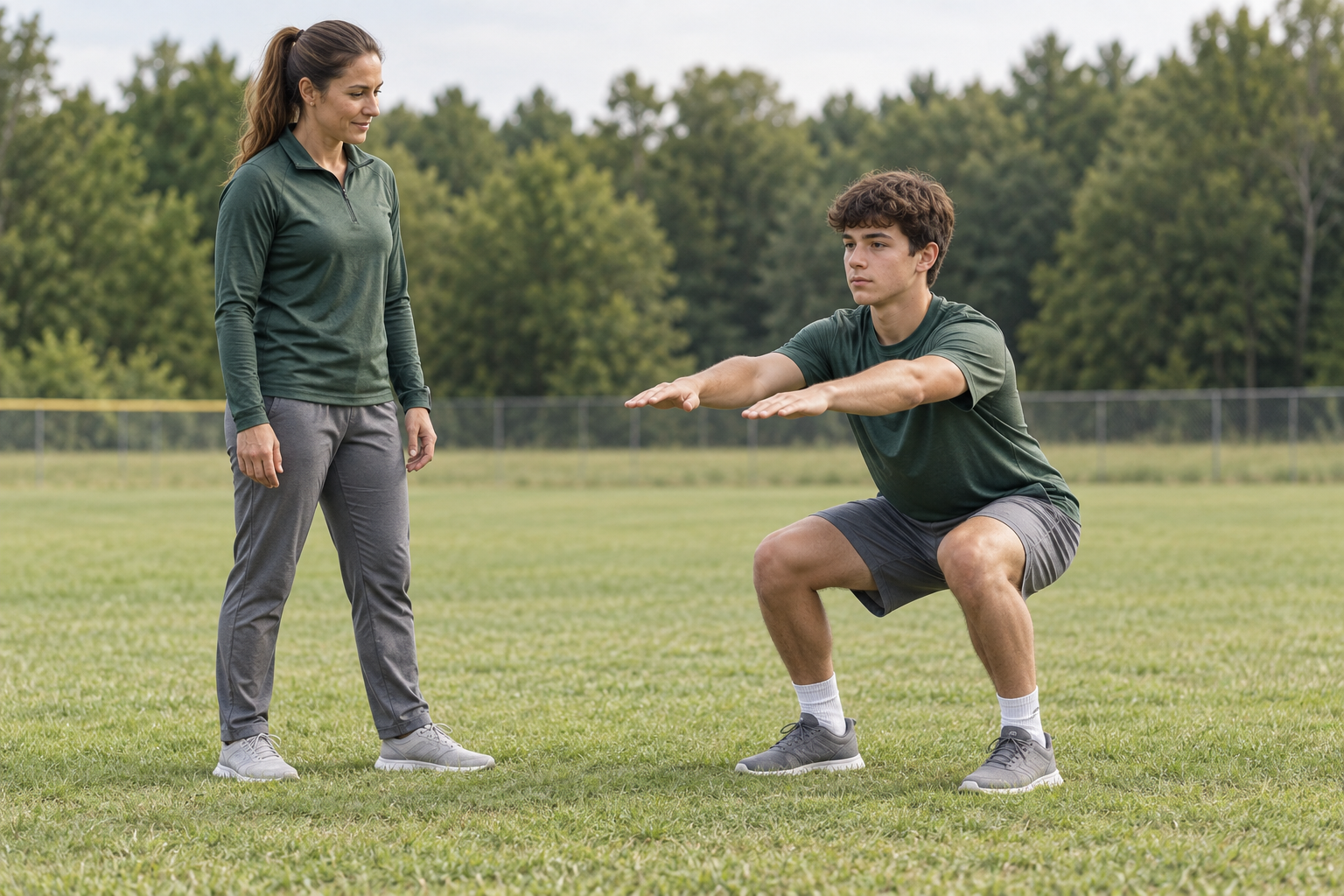
Generated illustration · example for coach-guided learning.
Learning diagram
Learning diagram
Example · Little League · league age 10 · 40 pitches on Monday
The final batter begins and ends within the 36–50-pitch rest band; no threshold exception applies in this example.
Learning diagram