For coaches · Little League Majors
Rules and safety
Find the rule. Check its source.
Get back to coaching.
National rules, local rules and event rules have different authority. Check the current official rules for your game.

Little League Majors reference
What do you need to check?
Open a topic for the full wording and its sources.
Pitching and rest
Limits, recovery and pitcher eligibility.
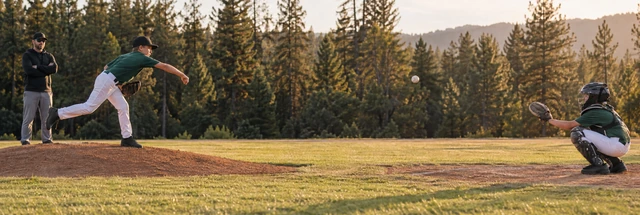
Regulation VI
Pitch Count Compliance & Rest Thresholds
In Majors, the manager (not the scorekeeper, not the umpire) is responsible for removing a pitcher who is no longer eligible.
Little League pitch limits and rest are governed by Regulation VI and are tied to a pitcher’s league age, not the division. A league-age-10 pitcher in Majors uses the 75-pitch cap; league age 11–12 uses 85. Required calendar days of rest scale with pitches thrown that day: 51–65 pitches requires three full calendar days, so a Saturday 52-pitch outing means Sunday through Tuesday off and Wednesday is the earliest next pitching day. No pitcher may ever pitch on three consecutive days. The figures below are quoted from the 2026 rule: confirm them against your current rulebook before relying on them.
| Actionable Management Takeaways | Oversight Checklists |
|---|---|
| Track every pitcher’s count yourself; cross-check the official recorder each half-inning. | You can state every pitcher’s exact count on request. |
| Plan the week backward from rest days before you set a rotation. | Each pitcher’s next eligible date is mapped on a calendar. |
| Know the mid-batter exception: a pitcher at the limit may finish that batter. | You know the four conditions that end the at-bat. |
| Check every Regulation VI catcher/pitcher crossover before either role change: 4+ caught innings bars pitching; 41+ pitches bars catching unless the 40-pitch batter-threshold exception applies; after 3 or fewer caught innings, 21+ pitches bars a return to catcher unless the 20-pitch exception applies. A Majors player pitches in only one game per day. | The adult logs both catcher innings and pitch counts, including applicable batter-threshold exceptions. |
| In Majors, no pitcher appears in more than one game per day. | Doubleheader plans respect the one-game rule. |
Coaching points
- Daily maximums by league age: 9–10 = 75; 11–12 = 85 pitches per day (Regulation VI(c)).
- Rest (league age 14 & under): 1–20 = 0 days; 21–35 = 1; 36–50 = 2; 51–65 = 3; 66+ = 4 calendar days.
- Rest is measured in calendar days, not games: map it on a real calendar.
- The count for the rest threshold is set by the first pitch to a batter; you may not start a new batter once the daily limit is reached.
Common mistakes
- Letting the scorekeeper ‘own’ the count: the rule places responsibility on the manager.
- Confusing league age with calendar age and using the wrong cap.
- Forgetting the 3-consecutive-days ban even when each day’s count was tiny.
- Ignoring outside workload (travel/showcase) that stacks on the same young arm.
Other ways to see it
- Limits are ceilings, not targets: a 12-year-old throwing 85 every outing is at higher cumulative risk than one averaging 50, even though both are ‘legal.’ USA Baseball Pitch Smart treats these as maximums; many coaches set stricter internal caps.
- Local leagues may go stricter, never more lenient: your league or district can adopt lower limits or extra rest. Check your local rules: the number you must obey may be tighter than the national figure.
- Pain trumps the chart: a pitcher under the limit who reports arm pain or velocity loss should still come out. The count is a floor of protection, not proof an arm is fine.
Lineups and participation
Roster placement, batting order and defensive rotation.

Playing Time
Inning-by-Inning Defensive Rotations
Mandatory play isn’t a hurdle to clear at the end of the game: it’s a plan you bring with you, written before the first pitch.
For a regular-season SLVLL Majors game, use the local continuous batting order: every present eligible player bats in a fixed spot even while off the field. SLVLL and Regulation IV(i) require at least six defensive outs; plan them for every player. Rule 3.03 traditional-order re-entry conditions matter when a different event uses that format, not as the explanation for SLVLL’s batting order. The International Tournament also uses continuous batting order but does not carry the regular-season defensive minimum. Rotate players for development as well as compliance.
| Actionable Management Takeaways | Oversight Checklists |
|---|---|
| Pre-write a defensive chart for all 6 innings before the game. | Every present player is slotted to meet minimum play. |
| Get bench players their 6 defensive outs early, not in a frantic 6th inning. | No player is ‘discovered’ short in the last inning. |
| Balance development: rotate kids through infield and outfield over the season. | No player is parked in right field every game. |
| Never create a safety mismatch (e.g., an unready player at a hot corner). | Each defensive slot matches the player’s readiness. |
| Put every present eligible player in SLVLL’s continuous batting order. | No player off the field is omitted from the batting order. |
Coaching points
- Chart it first. Compliance is trivial when planned and stressful when improvised.
- Get reserves in early: a kid who plays innings 1–2 has met defensive minimums with margin to spare.
- Develop the whole roster; today’s right-fielder is next year’s shortstop if you give reps.
- Match position to readiness for safety, then stretch players in lower-leverage moments.
Common mistakes
- Putting the 12th player in for only the last half-inning: that’s often just 3 outs, short of the six-out minimum.
- Hiding weaker fielders and over-playing your best: legal exposure and bad development.
- Assuming a shortened game has the same compliance remedy as a completed game: consult Regulation IV(i) and the applicable game format.
- Assuming the umpire tracks playing time: that responsibility sits with the manager.
Other ways to see it
- Different rules, different scope: SLVLL regular-season Majors uses continuous batting order and six defensive outs. If another regular-season event uses a traditional order, Rule 3.03 starter re-entry requires the substitute’s six consecutive defensive outs and defined at-bat. Consult Regulation IV(i) for mandatory-play exceptions.
- Development beyond compliance: spread safe opportunities across the roster rather than treating the minimum as a development target.
- International Tournament, Major Division: Tournament Rule 9 requires continuous batting order, with defensive entry/re-entry allowed; this replaces Regulation IV(i) and Rule 3.03. A Majors pitcher removed from the mound may not return as pitcher. Do not apply the regular-season defensive minimum described above to this tournament format.
Game and event rules
Check which rules govern your game.
Game Day
Game Day Dugout Management & Lineup Cards
A calm, organized dugout is a competitive advantage: the team that knows who bats next and where the helmets are plays faster and cleaner.
Game-day management is logistics plus discipline: SLVLL’s continuous batting order, legal defensive changes, an honest scorebook, and a dugout where players are engaged but safe. Bring two copies of the lineup, declare substitutions properly, and assign safe dugout jobs (next-hitter preparation, helmets, equipment) so the bench runs itself.
| Actionable Management Takeaways | Oversight Checklists |
|---|---|
| Bring two legible lineup copies; exchange with the opponent and scorekeeper. | Official scorekeeper and umpire have your card pre-game. |
| Know SLVLL defensive changes and the event’s lineup rules before you need them. | You can explain the applicable lineup format and defensive changes. |
| Keep (or assign) an accurate scorebook including pitch counts. | Book matches the official record each half-inning. |
| Assign safe dugout jobs: next-hitter mental preparation, helmets, and gate. There is no on-deck position in Majors. | Every player has a role; bench stays orderly. |
| Brief players on dugout safety (helmets to retrieve bats, stay behind the fence). | No loose bats; no one in the field of play. |
Coaching points
- Two lineup cards: one for you, one to hand in. A lost-card scramble is avoidable.
- Pre-load your substitution knowledge: mid-game is the worst time to learn re-entry rules.
- A clean scorebook is your defense if a pitch-count or batting-order question arises.
- Give every benched player a job; engaged kids stay safe and stay in the game mentally.
Common mistakes
- Illegible or single-copy lineup cards that trigger confusion at the plate meeting.
- Improvising substitutions and accidentally making a re-entry illegal.
- An incomplete scorebook that can’t answer a pitch-count challenge.
- A rowdy dugout with loose bats: a safety hazard and a discipline signal to the umpire.
Other ways to see it
- Regular season versus International Tournament: SLVLL regular-season Majors uses continuous batting order and six defensive outs. In the Major Division International Tournament, Rule 9 also requires continuous batting order and permits defensive entry/re-entry without a defensive-out minimum, but a pitcher removed from the mound may not return as pitcher. Do not substitute a generic tournament assumption for this national rule.
- Bench preparation: under Rule 1.08, the next batter stays in the dugout, ready with a helmet, without picking up a bat until their turn at bat; fenced-in areas are not on-deck areas. Only the first batter of a half-inning may be outside the dugout between half-innings.
- Who keeps the book: managers may delegate scorekeeping while retaining responsibility for accurate pitch counts and legal substitutions.
Adversity
Managing In-Game Chaos & Broken Scenarios
Players take their emotional temperature from the manager: in a rain delay, a blown call, or an injury, your calm is the plan.
Things break: weather rolls in, a call goes against you, a player gets hurt, or your defense needs an emergency shuffle. Each has a sane protocol. Keep players safe and occupied during delays, address umpires through process rather than emotion, follow injury steps deliberately, and have a pre-thought plan for losing a pitcher or fielder mid-game. The throughline is composure.
| Actionable Management Takeaways | Oversight Checklists |
|---|---|
| Lightning: stop play and move everyone into a substantial building with wiring and plumbing, or a hard-topped metal vehicle with closed windows. Dugouts are not safe. Wait at least 30 minutes after the last thunder before resuming, following the site plan. | Account for every player in safe shelter and track the last thunder before a restart. |
| Umpires: ask calmly for a rule/clarification through proper channels, not judgment-call arguments. | You request clarification, not a re-litigation of a judgment call. |
| Suspected concussion or other head injury: remove the player immediately for the rest of the day, notify the parent or guardian, and require written clearance from a licensed healthcare provider before any return. If the provider confirms a concussion or other head injury, follow the provider-supervised return-to-play protocol for at least seven days. The coach does not clear the player. | Follow California Health and Safety Code 124235 and the league emergency plan. |
| Emergency alignment: have a ‘next pitcher / next fielder’ plan ready. | A backup pitching/defense plan exists before you need it. |
| Model composure; one steady voice resets a rattled dugout. | Your tone stayed calm and the bench followed. |
Coaching points
- Lightning/weather: use a substantial building or hard-topped vehicle, never the dugout. The National Weather Service advises waiting at least 30 minutes after the last thunder.
- Disagree with umpires through process: you may ask for a rule clarification, calmly and at the right moment.
- For a suspected concussion or head injury, remove the player for the rest of the day; return requires written clearance from a licensed healthcare provider. Stop throwing for arm pain and arrange appropriate evaluation.
- Pre-decide your next-pitcher and emergency-defense options so a mid-game loss isn’t a panic.
Common mistakes
- Keeping players in any dugout, bleachers or open field during lightning to ‘wait it out.’
- Arguing balls/strikes or other judgment calls: it won’t change and it models poor behavior.
- Pressuring a shaken or hurt player back into the game.
- No contingency, so losing your starter to the pitch limit becomes a scramble.
Other ways to see it
- Clarification vs. judgment: managers can generally request that an umpire clarify or correctly apply a rule (e.g., batting out of order, an eligibility question), but judgment calls (safe/out, balls/strikes) are not reviewable and won’t be changed. The exact conferencing process varies by league: learn your local norms and stay respectful either way.
- How hard to compete in adversity: there’s a real tension between teaching toughness (‘play through it’) and protecting kids (‘sit when in doubt’). For weather and injuries, default hard toward safety; the ‘compete’ lesson is never worth a hurt child.
- Resumption & pitcher eligibility: in suspended games resumed another day, a pitcher’s eligibility still depends on required rest: a pitcher who threw heavily may not be eligible when play resumes. Don’t assume your starter can simply pick up where they left off; verify against Regulation VI.
Safety at practice
Weather, head injuries, throwing and supervision.

Coaching practice
Before practice: the site and the plan
- Know the field address and where an ambulance would enter. Carry a charged phone.
- Bring a first-aid kit and know where the nearest AED is, if the site has one.
- Decide who calls 911 and who meets responders before anyone gets hurt.
- Keep emergency contacts where your league keeps them. This planner has no place for names, medical details or phone numbers, and none should be typed into it.
Safety guidance
Weather and heat
- Thunder or lightning: stop, and move everyone into a substantial building or a hard-topped vehicle with the windows closed. A dugout is not shelter.
- Wait at least 30 minutes after the last thunder before going back out (National Weather Service guidance), and follow your site plan.
- Heat: plan water breaks and shade. Stop a player who looks dizzy, confused or unusually tired and get help.
California law and CDC guidance
Head injury, fainting and emergencies
- California Health and Safety Code 124235 applies to youth sports organizations in California: a player suspected of a concussion or other head injury, or who passes out or faints, is removed from the activity for the rest of the day.
- That player does not return until a licensed healthcare provider gives written clearance. After a concussion or head injury, return follows a graduated protocol of at least seven days under that provider. The coach never clears a player.
- For a suspected head injury the organization notifies a parent or guardian of the time, the symptoms seen and any treatment given.
- Call 911 for anyone who is unresponsive, not breathing normally, or having a seizure. Start CPR and use an AED if trained and one is available.
- Coaching advice: stop activity for chest pain, unusual shortness of breath or a racing heartbeat during exercise, and tell the parent or guardian.
Coaching practice
Arms and throwing
- Any arm pain stops throwing for that player that day. Tell a parent or guardian.
- Game pitch limits are maximums for games, not targets for practice. A practice plan never counts as pitching eligibility.
- Breaks between throwing blocks are part of the plan. Do not shorten warm-up or throw more to fill time.
Coaching practice
Lanes, bats and loose balls
- Every throwing line throws the same direction; nobody walks between lines.
- Only the batter holds a bat. Waiting players stand behind a marked line.
- Balls are collected on an adult's call, never while someone is swinging or throwing. Players do not chase balls into another station.
- Helmets for batters and runners, and any other equipment your rules require.
League policy
Adults at practice
- Drill adult counts are station minimums. Follow the organization's supervision, screening and reporting policies. California youth-service policy requires at least two mandated reporters to be present to the greatest extent possible when adults contact or supervise children (BPC 18975).
- Only league-approved adults who have completed the required screening and training lead stations.
- Keep adult-player interactions observable and interruptible: no one-on-one time out of sight.
- If there are not enough approved adults for every station, run fewer stations. Never leave a station with bats or thrown balls unsupervised to make the numbers work.
Coaching situations
Practical examples for planning and managing the game.
Practice Design
The 90-Minute Practice Machine
The enemy of player development isn’t a lack of talent: it’s a line of kids standing around waiting for a turn.
A high-efficiency Majors practice is built from short, parallel stations rather than one whole-team drill at a time. Time-block the session before you arrive, assign each league-approved, screened helper a visible station with a clear job, and rotate small groups on a timer so reps-per-player stay high. The goal is regular turns for every player, with water breaks and ball collection planned in, not constant throwing.
| Actionable Management Takeaways | Oversight Checklists |
|---|---|
| Write a minute-by-minute plan and physically bring it to the field. | Plan exists in writing before warm-ups start. |
| Run 3–4 stations of 4–5 players; rotate every ~12 minutes on a whistle. | Each station has ≤5 players and a defined drill. |
| Give each league-approved helper one observable station and a brief safety script. | Required screening and training are complete; interactions stay observable and interruptible. |
| Give waiting players supervised jobs outside swing and batted-ball lanes, such as calling pitch locations or checking a cue. Load or collect balls only after swings and feeds have stopped, the bat is down, and the adult gives the signal. | Every station gives each player regular turns, with planned water breaks and ball collection on an adult’s call. |
| Close with a team conditioning game tied to one teaching point. | Practice ends on time with a clear takeaway. |
Coaching points
- Time-block on paper; a written plan is the single biggest driver of practice quality.
- Stations beat lines: four kids hitting off tees beats twelve kids watching one live BP hitter.
- Coach one cue per drill. ‘Throw to the glove side’ lands; five corrections at once do not.
- Use only league-approved helpers who have completed required screening and training. Keep every station observable and interruptible by another adult.
Common mistakes
- Whole-team drills where 11 kids watch 1: the classic rep-killer.
- No timer, so the first station eats 35 minutes and you never reach baserunning.
- Over-coaching: stopping every rep to correct erases the volume kids need.
- Ending late and losing the field: respect the next team’s slot.
Other ways to see it
- Stations vs. team reps: stations maximize volume, but some game situations (cutoffs, first-and-third defense) genuinely need the whole team on the field at once. Budget one team segment per practice rather than choosing one philosophy for everything.
- Fewer helpers, simpler plan: if you can’t reliably staff 4 stations, 2 well-run stations beat 4 chaotic ones. Match the plan to the adults you actually have, not the ones you wish you had.
Warm-Up
The 60-Minute Pre-Game Warmup Clock
A repeatable warm-up does two jobs at once: it gets arms and bodies ready, and it settles nervous players into a familiar routine.
Treat the hour before first pitch as a countdown with named segments so nothing gets skipped and the starting pitcher peaks on time. The sequence moves from setup and dynamic stretching, through a throwing progression and long toss, into infield/outfield reps, the starter’s bullpen, and a final team huddle. Adjust the clock to your field time, but keep the order.
| Actionable Management Takeaways | Oversight Checklists |
|---|---|
| 60–45 min: equipment out, dynamic stretch, field/ground-rule check. | Field is set; players are physically warm, not just present. |
| 45–30 min: throwing progression building to long toss. | Arms progressed gradually: no one started at full effort. |
| 30–15 min: infield/outfield ground balls and fly balls. | Every position has taken game-like reps. |
| 15–5 min: starting pitcher bullpen; catcher receives/frames. | Starter finishes warm with time to spare, not rushed. |
| 5–0 min: team huddle, lineup confirmed, energy and focus up. | Team takes the field on time and on the same page. |
Coaching points
- Build the arm gradually: warm muscles and a throwing progression before any hard throws.
- Time the bullpen so the starter finishes a few minutes before first pitch, not at it.
- Make the routine identical every game; familiarity calms nerves more than a pep talk.
- Use the huddle to set one focus (‘first-pitch strikes’ / ‘run hard to first’), not a long speech.
Common mistakes
- Skipping the dynamic warm-up and going straight to throwing: an injury setup.
- A bullpen that ends right at first pitch, leaving the starter rushed or cooling off.
- No I/O reps, so the first live ground ball of the day happens in the 1st inning.
- A new routine every week, so players never internalize it.
Other ways to see it
- Compressed field time: if you only get 30 minutes before first pitch, you can’t run the full hour. Prioritize the throwing progression and the starter’s bullpen, and move I/O reps into the previous practice rather than cramming.
- Long toss for young arms: long toss is valuable but should be progressive and capped; an over-aggressive max-distance session pre-game can leave a starter’s arm taxed before the first pitch. Keep it controlled.
- Static vs. dynamic stretching: current guidance favors dynamic movement pre-game over long static holds; save deeper static stretching for cool-down. Some coaches still mix in light static work: keep it brief if so.
Sources and review date
Check the current official rules and written local options for your game. Coaching suggestions are teaching choices.